

 Khizrana Begum
Health & Wellness Writer
Khizrana Begum is a health and wellness writer
focused on clear, practical, and reader-friendly
health, nutrition, fitness, and lifestyle content.
Read Full Bio of Author →
Khizrana Begum
Health & Wellness Writer
Khizrana Begum is a health and wellness writer
focused on clear, practical, and reader-friendly
health, nutrition, fitness, and lifestyle content.
Read Full Bio of Author →
 Sameena Begum
Health, Wellness & Digital Content Reviewer
Sameena Begum reviews health, wellness, fitness, nutrition, and digital content for clarity, factual presentation, consistency, and reader usefulness.
Read Full Bio of Reviewer →
Sameena Begum
Health, Wellness & Digital Content Reviewer
Sameena Begum reviews health, wellness, fitness, nutrition, and digital content for clarity, factual presentation, consistency, and reader usefulness.
Read Full Bio of Reviewer →
 Dr. Syed Imtiaz
General Physician & Dermatologist
Dr. Syed Imtiaz is an MBBS and MD qualified
medical professional with 5+ years of experience
in general medicine and dermatology.
Read Full Bio of Medical Reviewer →
Dr. Syed Imtiaz
General Physician & Dermatologist
Dr. Syed Imtiaz is an MBBS and MD qualified
medical professional with 5+ years of experience
in general medicine and dermatology.
Read Full Bio of Medical Reviewer →
Lab-grown chicken meat is also popularly known as cultivated meat. It is the process of growing chicken in a lab from stem cells taken from an egg instead of a farm. They are grown in stainless steel tanks in labs. It is the chicken, not just one hatched from an egg.
The USDA has given the final OK for chicken fully grown in a lab. The newly cultivated chicken will not likely be available at grocery stores soon. People who have given up meat to keep their carbon footprints low may no longer have to choose between the environment and a juicy piece of chicken.
The United States Department of Agriculture has approved two companies to sell lab-grown chicken. The idea is to create an alternative to agriculturally raised meat that is animal and not plant-based. The two companies, Upside Foods, and Good Meat, had been competing to be the first to be approved to produce lab-grown meat.
But is lab-grown chicken the same as traditional chicken? Here’s what to know.
How is meat “cultivated?”
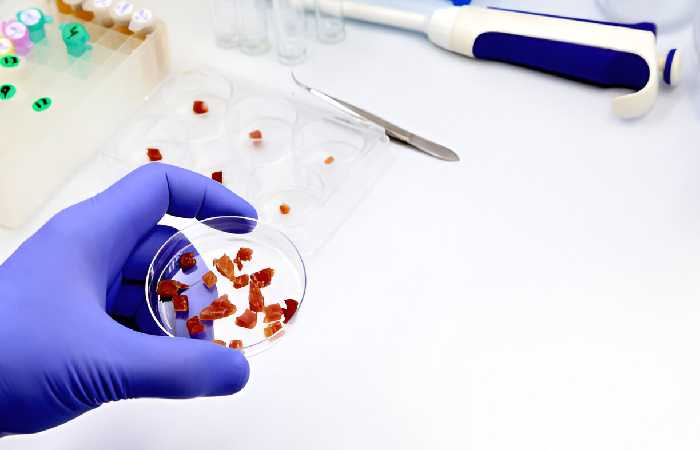
Upside Foods and Good Meat, USDA-approved companies, cultivate the chicken cells in steel tanks. The cells form sheets of 100% chicken. Upside’s lab-grown chicken is formed into chicken cutlet or sausage shapes, while Good Meat turns chicken cells into cutlets, nuggets, shredded meat, and satays.
After the cells are selected, they are mixed with a broth mixture of amino acids, fatty acids, sugars, salts, and vitamins and placed into the tanks.
Everything one needs to have chicken, including muscle and connective tissue, grows inside the tank, creating sheets. The entire process takes about three weeks for the sheets of poultry cells to fully form, which are then turned into specific food shapes. For readers interested in how different foods and ingredients are used in cooking, exploring an oyster sauce substitute can also provide ideas for adapting recipes to different dietary preferences.
Does cultivated chicken taste like chicken?
According to both Upside and Good Meat, the answer is yes.
Companies say cultivated chicken has the same nutritional value, chemistry, and taste as regular chicken hatched from an egg. Unlike meat substitutes, which are plant-based, lab-grown chicken is truly chicken.
When comparing food products, it is also helpful to understand their nutritional composition. For example, the Coke Zero nutrition label explains how to read the nutrition information on a popular beverage and compare its ingredients and nutrient content.
Why to buy cultivated chicken?
Many people may want to go to cultivated chicken to lower their carbon footprint.
According to the University of Colorado Boulder’s Environmental Center, “Animal agriculture produces 65% of the world’s nitrous oxide emissions, which has an impact 296 times more than carbon dioxide on global warming. Additionally, some people may hesitate to eat traditional chicken due to concerns about animal welfare or industrial farming practices.
People who want to make informed food choices may also be interested in the potential uses and nutritional properties of herbs and spices. Our guide to clove benefits discusses some of the ways cloves are traditionally used and why they are popular in everyday diets.
Where can I buy cultivated chicken?
It’s not yet possible to buy lab-grown chicken in grocery stores. The products are still too expensive and difficult to produce enough for them to be readily available in a grocery store aisle.
However, two high-end restaurants will feature the new products.
Upside will sell its chicken at a San Francisco restaurant called Bar Crenn, whereas Good Meat chicken will remain served at a Jose Andres restaurant in Washington, D.C.
Differentiate between cultivated chicken and commercial chicken farm
The new companies are tiny compared to the industrial chicken farming industry.
Upside, for example, operates in a 70,000-square-foot building in Emeryville, California. Good meat, based in Alameda, has a 100,000-square-foot plant.
According to the Associated Press, Upside plans to increase its production from 50,000 pounds of cell-cultivated meat to 400,000. However, this is just a sliver of the billions of pounds of chickens produced agriculturally each year.
“There are two different narratives here,” said Ricardo San Martin, PhD, the Alternative Meats Lab director at UC Berkeley. “One is science-based, and one is from a start-up perspective. It is in our best interest that something like lab-grown meat could be part of our work. We analyzed to know if [production of lab-grown meat] is feasible at scale, and that’s where we encountered problems because the science and technology tell us that we are very far from making anything commercial.”
San Martin says it is impossible to even make a dent in the poultry industry with lab-grown chicken, as the number of chickens killed yearly for consumption is 9 billion. Lab-grown chicken is already expensive for the small-scale batches it can produce. Nine billion is, at the moment, nothing short of impossible.
When preparing food at home, ingredient knowledge can also be useful for adapting recipes. For example, a guide to a substitute for baking soda can help when a common baking ingredient is unavailable. Similarly, learning about coriander vs cilantro can help clarify the difference between these commonly discussed culinary terms.
Conclusion
The lab-grown chicken won’t affect anything in the chicken industry. It’s not a question of whether or not you can eat it safely or produce it. It’s a business narrative but not a real-world narrative based on science and capital cost.
For readers exploring nutrition and dietary choices more broadly, Boost vs Ensure offers a comparison of two nutritional drinks and their intended uses.
Khizrana Begum creates clear and reader-friendly content covering health, wellness, nutrition, fitness, and healthy lifestyle topics.
View Author Profile →
Sameena Begum reviews health, wellness, fitness, nutrition, and digital content for clarity, factual presentation, consistency, and reader usefulness.
View Reviewer Profile →
Dr. Syed Imtiaz is an MBBS and MD qualified medical professional with 5+ years of experience in general medicine and dermatology.
View Medical Reviewer Profile →