
 Khizrana Begum
Health & Wellness Writer
Khizrana Begum is a health and wellness writer
focused on clear, practical, and reader-friendly
health, nutrition, fitness, and lifestyle content.
Read Full Bio of Author →
Khizrana Begum
Health & Wellness Writer
Khizrana Begum is a health and wellness writer
focused on clear, practical, and reader-friendly
health, nutrition, fitness, and lifestyle content.
Read Full Bio of Author →
 Sameena Begum
Health, Wellness & Digital Content Reviewer
Sameena Begum reviews health, wellness, fitness, nutrition, and digital content for clarity, factual presentation, consistency, and reader usefulness.
Read Full Bio of Reviewer →
Sameena Begum
Health, Wellness & Digital Content Reviewer
Sameena Begum reviews health, wellness, fitness, nutrition, and digital content for clarity, factual presentation, consistency, and reader usefulness.
Read Full Bio of Reviewer →
 Dr. Syed Imtiaz
General Physician & Dermatologist
Dr. Syed Imtiaz is an MBBS and MD qualified
medical professional with 5+ years of experience
in general medicine and dermatology.
Read Full Bio of Medical Reviewer →
Dr. Syed Imtiaz
General Physician & Dermatologist
Dr. Syed Imtiaz is an MBBS and MD qualified
medical professional with 5+ years of experience
in general medicine and dermatology.
Read Full Bio of Medical Reviewer →
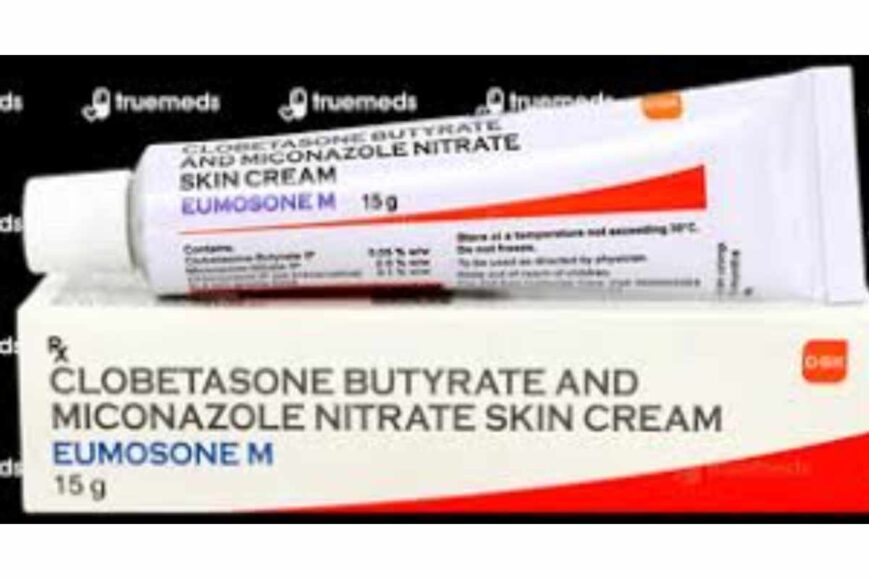
Clobetasone Butyrate And Miconazole Nitrate Skin Cream – you ever stared at a stubborn rash or itchy patch of skin that just won’t quit—no matter how much moisturizer you slap on? You’re not alone. We all have been there, scratching our heads (and everything) trying to figure out what is going to work. That is generally when one gets a tube of clobetasone butyrate and miconazole nitrate skin cream. Now then we can discuss it just like two ordinary citizens, no doctor-coat airs as that is how I heard about this stuff too.
Clobetasone Butyrate And Miconazole Nitrate Skin Cream
Clobetasone Butyrate and Miconazole Nitrate Skin Cream is a topical combination medicine containing:
- Clobetasone Butyrate – a topical corticosteroid that reduces inflammation, redness, itching and swelling.
- Miconazole Nitrate – an antifungal agent that stops the growth of fungus by disrupting its protective cell membrane.
| Feature | Details |
| Product Type | Combination topical skin cream |
| Main Ingredients | Clobetasone Butyrate + Miconazole Nitrate |
| Clobetasone Butyrate | Mild-to-moderate topical corticosteroid (reduces inflammation, redness, itching) |
| Miconazole Nitrate | Antifungal agent (kills or stops growth of fungi) |
| Primary Use | Treats fungal skin infections with inflammation |
| Common Conditions Treated | Ringworm, athlete’s foot, jock itch, infected eczema, dermatitis |
| How It Works | Miconazole fights fungal infection; Clobetasone reduces swelling, redness & irritation |
| Prescription Status | Usually prescription-based (varies by country) |
| Form | Cream (sometimes ointment depending on brand) |
| Suitable For | Adults and children (as advised by a doctor) |
Composition
| Component | Category | Primary Function | Typical Role |
| Clobetasone Butyrate | Corticosteroid | Reduces redness, swelling, itching | Controls inflammation |
| Miconazole Nitrate | Antifungal | Kills fungal organisms | Treats fungal infection |
| Cream Base | Vehicle | Enhances absorption | Supports application |
If you want to learn more about the benefits and applications of this combination medicine, read our detailed guide to clobetasone butyrate and miconazole nitrate skin cream uses.

In Which situations Do people tend to reach this cream?
You can get pretty much any time you want:
Sudden crusty or oozing eczema.
Itchy, spreading circles (classic ringworm) which are red.
- Athlete’s foot that’s gone nuclear
- Jock itch that makes you walk funny
- Nappy rash on babies that looks yeasty and angry
- Seborrheic dermatitis on the face or scalp that’s flaring with a fungal twist
If your skin is red, scaly, and itchy, and nothing over-the-counter is touching it, this is usually the next step before the doctor starts throwing around oral meds.
Typical Uses of Clobetasone Butyrate And Miconazole Nitrate Skin Cream
| Condition | Why It’s Used | How It Helps |
| Ringworm (Tinea corporis) | Fungal infection of the body | Kills fungus & reduces redness and itching |
| Athlete’s Foot (Tinea pedis) | Fungal infection between toes | Stops fungal growth & relieves irritation |
| Jock Itch (Tinea cruris) | Fungal infection in groin area | Clears infection & soothes inflamed skin |
| Infected Eczema | Eczema with secondary fungal infection | Reduces inflammation & treats fungal cause |
| Seborrheic Dermatitis (fungal-related cases) | Scaly, itchy rash (often on scalp/face) | Controls fungal activity & calms skin |
| Inflamed Fungal Rash | Red, itchy fungal patches | Combines antifungal action with anti-inflammatory relief |
| Intertrigo (fungal-related) | Rash in skin folds | Treats fungal infection & reduces swelling |
How It Works
| Component | Category | How It Works | Result on Skin |
| Clobetasone Butyrate | Mild-to-moderate corticosteroid | Reduces inflammation by suppressing the immune response in the skin | Decreases redness, swelling, itching, and irritation |
| Miconazole Nitrate | Antifungal medication | Damages fungal cell membranes and stops fungal growth | Eliminates fungal infection |
| Combination Effect | Dual-action therapy | Treats infection (fungus) while controlling inflammation | Faster relief from symptoms and improved skin healing |
| Overall Outcome | Anti-inflammatory + Antifungal | Addresses both cause (fungus) and symptoms (itching/redness) | Clearer, calmer skin with reduced discomfort |
Price of Clobetasone Butyrate And Miconazole Nitrate Skin Cream
Another topical medicine you may want to learn about is used for certain skin conditions. Read more about Fradiomycin skin cream uses to understand its applications and precautions.
| Product | Pack Size / Description | Approx. Price (India) |
| Clobeta‑GM Cream | Antifungal + corticosteroid cream | ₹62.60 |
| Clobet Gm RC Tube Of 10gm Cream | Dual-action anti-fungal/steroid cream | ₹30.24 |
| Clobetero m Neo 15GM Cream | Mixed antifungal steroid product | ₹110.10 |
| Clop‑G Cream 30 gm | General topical clobetasone-miconazole type | ₹39.60 |
| Clobnate N Cream 15 gm | Fungal & inflammation cream | ₹36 |
| Clostar GM New Formula Tube Of 16gm Cream | Dual antifungal + steroid | ₹49.81 |
| Clobetasen GM Cream 10gm | Antifungal/steroid dual action | ₹50.25 |
| Clobeta Gm 20GM Cream | Larger tube version | ₹125 |
| Clop‑Gm Neo Cream 15GM | Variant with antifungal mix | ₹98.22 |
Side Effects
| Common Side Effects | Rare but Serious Effects |
| Mild burning | Skin thinning (long-term use) |
| Dryness | Hormonal imbalance (excess steroid use) |
| Redness | Allergic reaction |
| Irritation | Stretch marks with prolonged use |
Note: Long-term unsupervised steroid use may cause skin damage.
How to Use It Without Screwing Up Your Skin?
This isn’t some gentle moisturizer you slather everywhere. It’s prescription-strength for a reason. Here’s the dummy-proof routine I follow:
- Wash the area gently — no harsh soap, just lukewarm water or a mild cleanser.
- Pat dry — rubbing makes everything angrier.
- Pea-sized amount — seriously, a little goes a long way. Spread a thin film over the rash and a tiny bit of normal-looking skin around it.
- Twice a day max — morning and night. Most doctors say 7–14 days tops.
- Hands washed after — unless you want it on your face by accident later.
For additional skincare information, you can also explore Calyx Skin Lab for related skin-care insights.
Pro tip I learned the hard way: If you’re using it in skin folds (groin, under boobs, armpits), slap it on sparingly and maybe dust a little antifungal powder on top during the day so it doesn’t get too moist and cancel itself out.
The Stuff Doctors Warn You About
Yeah, it’s a steroid + antifungal combo, so respect it.
- Don’t use it longer than 2 weeks straight unless your doc says so — skin thinning is real if you go rogue.
- Avoid the face, eyes, and genitals unless the doctor specifically prescribed it there (clobetasone is mid-potency; face skin is drama).
- If it stings or burns like hell when you put it on, stop and call the doc — it could be too strong for that spot.
- Not for open wounds or viral infections (like cold sores — that’s a hard no).
What to Expect: My Day-by-Day Experience
Here’s the timeline when I had that ringworm-meets-eczema mess on my thigh last year:
- Day 1–2: Itch dropped 70%. Still red, but I could finally sleep.
- Day 4: Red ring started fading from the inside out (classic fungal kill sign).
- Day 7: Mostly flat, just some leftover pinkness and dry skin.
- Day 10: Switched to plain moisturizer. Done.
Your mileage may vary, but that’s pretty typical.
How to Actually Use It (Because Nobody Reads the Leaflet Twice)
Super simple, but doing it right makes the difference between “meh” and “holy crap, my skin is normal again.”
- Wash and fully dry the area first—fungus loves moisture.
- Squeeze out a pea-sized amount (seriously, a little goes a long way).
- Rub it in gently until it disappears. Twice a day max—morning and night.
- Wash your hands after (unless it’s your hands you’re treating).
- Most docs say use it for 7–14 days. If it’s not 80% better by day 7, go back.
- Big rule: Don’t keep using the steroid part longer than recommended. After the fungus is dead and the inflammation is down, many doctors switch you to just an antifungal or plain moisturizer.
Real story: I once kept using it for a month because “it was still working.” Ended up with thinner skin and tiny blood vessels showing through. Lesson learned—steroids are like that friend who’s awesome for a weekend, but you don’t want them moving in.
For readers interested in skin wellness and related products, our guide to Skin Booster Herbalife offers another resource to explore.
Dosage & Application Guidelines
| Step | Instruction |
| 1 | Clean and dry affected area |
| 2 | Apply thin layer |
| 3 | Use 1–2 times daily (as prescribed) |
| 4 | Do not cover tightly unless directed |
| 5 | Complete full course |
Pro Tips I Wish Someone Told Me Earlier
- Pair it with an emollient routine. Steroid + antifungal fixes the crisis; thick bland cream (think Cetraben, Hydromol, Zerobase) prevents the next one.
- Change socks twice a day if it’s athlete’s foot. No point putting cream on and then marinating fungus in sweaty nylon.
- Throw the towel in the wash after every use—fungal spores are clingy little jerks.
- If it’s ringworm on the scalp, you’ll probably need oral meds too. Cream alone won’t reach the hair follicles.
- Don’t share the tube. Just don’t.
Precautions & Warnings
| Precaution | Reason |
| Avoid long-term use | Risk of steroid side effects |
| Do not use on open wounds | May worsen irritation |
| Avoid eye contact | Can cause irritation |
| Use under medical guidance | Especially for children & face area |
| Not for viral infections | Only works for fungal infections |
The Bottom Line: Clobetasone Butyrate and Miconazole Nitrate Skin Cream
When your skin is itchy, inflamed, and maybe a little suspicious that fungus crashed the party, clobetasone butyrate and miconazole nitrate skin cream is one of the most reliable tag-team treatments out there. It’s not some miracle potion you use forever—it’s the fire extinguisher you grab when things are burning, then put away once the flames are out.
Frequently Asked Questions
Q1. Is this cream safe for long-term use?
No, prolonged steroid use can cause skin thinning and other complications.
Q2. Can it treat all fungal infections?
It treats many common fungal infections but not all. Medical diagnosis is recommended.
Q3. Can I use it on my face?
Only under medical supervision.
Khizrana Begum creates clear and reader-friendly content covering health, wellness, nutrition, fitness, and healthy lifestyle topics.
View Author Profile →
Sameena Begum reviews health, wellness, fitness, nutrition, and digital content for clarity, factual presentation, consistency, and reader usefulness.
View Reviewer Profile →
Dr. Syed Imtiaz is an MBBS and MD qualified medical professional with 5+ years of experience in general medicine and dermatology.
View Medical Reviewer Profile →