
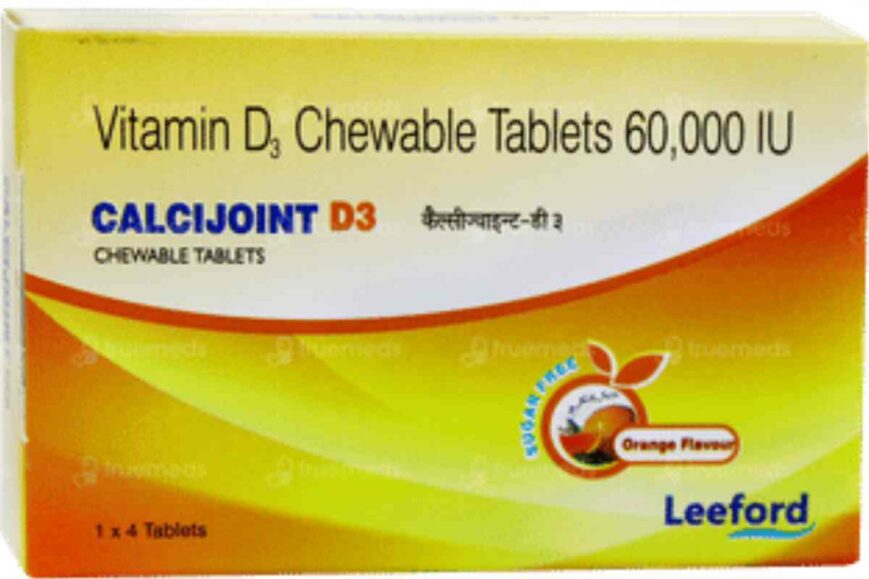
Cholecalciferol Chewable Tablets 60000 IU – Cholecalciferol is Vitamin D3. It is a form of vitamin D which is required in our body to remain healthy.
lass=”yoast-text-mark” />>It is made on our skin as we romp in the sunshine.
>It is also available in animal food (such as fish or egg yolk) or supplements.
>It is unlike Vitamin D2 (plant based).
Vitamin D3 is more effective in increasing the level of vitamin D in our blood.
The 60,000 IU pill is a tremendously high dose. It serves to correct huge deficits, not on a daily basis. It is an easy to take chewable tablet (usually orange or mint flavor) that is easy to use.
| Category | Advantages / Benefits | Disadvantages / Risks |
| Primary Action | Promotes absorption of calcium & phosphorus → supports bone mineralization and strength. | Over-supplementation can lead to hypervitaminosis D → high calcium levels, which may cause nausea, vomiting, weakness, and confusion. |
| Efficacy in Deficiency | Effective for treating Vitamin D deficiency, rickets (kids), osteomalacia, and osteoporosis prevention in deficient individuals. | High loading doses should be restricted to deficiency states; routine use in non-deficient people is not well supported. |
| Immune & Muscle Function | Supports immune function, may improve overall immunity and muscle strength, potentially reducing risk of falls. | Some users report late-course symptoms (e.g., knee pain or discomfort), though data are anecdotal. |
| Dosing Convenience | High-dose form (weekly or short course) offers convenient supplementation vs daily low doses. | Incorrect dosing (too frequent or long duration) increases risk of toxicity. Reddit discussions often emphasize need for blood level monitoring. |
| Formulation Advantage | Chewable form may be easier to administer (esp. older adults, kids) and improves compliance. | Chewable tablets may contain sugars or flavouring agents (consider in diabetes/phenylketonuria) and require proper storage. |
| Contraindications/Precautions | Can be used in pregnancy & lactation if deficient, under physician guidance. | Not recommended in hypercalcemia, severe renal/liver disease, or pre-existing hypervitaminosis D. |
| Side Effects (Clinically Documented) | Well-tolerated at recommended doses; rarely significant side effects. | Clinically documented mild GI effects: constipation, nausea, increased urinary calcium; rare skin allergy. |
| Drug Interactions | — | Reduced absorption with bile-acid binders/cholestyramine; interactions with antiepileptics & corticosteroids; caution with digitalis. |
| Bone Health Evidence | Supplementation increases bone mineral density and may reduce fracture risk in deficient or elderly patients (supported in calcium + D studies). | Not a standalone fracture treatment; needs calcium & lifestyle support, and appropriate clinical indication. |
Table of Contents
ToggleWhy Do We Need It?
Vitamin D is beneficial to our body in numerous ways:
| Job | How It Helps |
|---|---|
| Strong Bones | Helps absorb calcium from food → makes bones hard and strong. |
| Strong Muscles | Keeps muscles working well → prevents falls. |
| Healthy Immune System | Helps fight colds and infections. |
| Healthy Growth | Kids need it to grow tall and strong. |
Who Needs 60,000 IU Tablets?
This high dose is given when blood tests show very low vitamin D (below 20 ng/mL).
Common reasons for low vitamin D:
- Not enough sunlight (especially in winter or cloudy places)
- Dark skin (needs more sun)
- Staying indoors a lot
- Obesity (fat traps vitamin D)
- Eating very little meat/milk
- Problems absorbing food (like celiac disease)
How to Use It (Dosage)
| Age Group | Common Dose |
|---|---|
| Adults | 1 tablet (60,000 IU) once a week for 6–8 weeks |
| Kids >12 | Half tablet, only if doctor says |
| After fixing shortage | Switch to 1,000–2,000 IU daily |
Tips to Take It Right:
Chew well before swallowing.
Eat with a fatty food (such as eggs, milk or nuts) → makes body absorb it more effectively.
Do not take high fiber food or antacids simultaneously.
Benefits
| Benefit | What Happens |
|---|---|
| Fixes weak bones | Stops rickets in kids, osteoporosis in adults. |
| Fewer falls | Stronger muscles → safer for old people. |
| Fewer colds | Boosts immunity → less sick days. |
| Easy to take | Tasty chewable → kids and adults like it. |
| Cheap | One month supply often costs less than ₹300–500. |
Disadvantages (Not Frequent yet Significant)
Excessive vitamin D may lead to hypervitaminosis D (excessive calcium in blood).
Warning Signs:
- Feeling very thirsty
- Peeing a lot
- Weakness or confusion
- Stomach pain
- Kidney stones
Who Should Be Careful?
- People with kidney problems
- Using steroids or weight loss medication.
- Already high calcium levels
- Always ask a doctor before starting!
- Fun Facts
- 10–15 minutes of sun on arms and face gives natural vitamin D.
- Hyderabad gets lots of sun — but AC offices and pollution block it!
- Darker skin needs 3–5 times more sun than light skin.
- Vitamin D is called the “sunshine vitamin”.
Final Words
- Cholecalciferol 60,000 IU chewable tablets are a super boost to cure deficiency of vitamin D. They contribute to the creation of healthy bones, the struggle against germs and the maintenance of muscles in readiness to run and play.
- But remember:
- Only take if a blood test shows you need it.
- Always follow doctor’s advice.
- After fixing the shortage, switch to daily low-dose or sun + food.
