
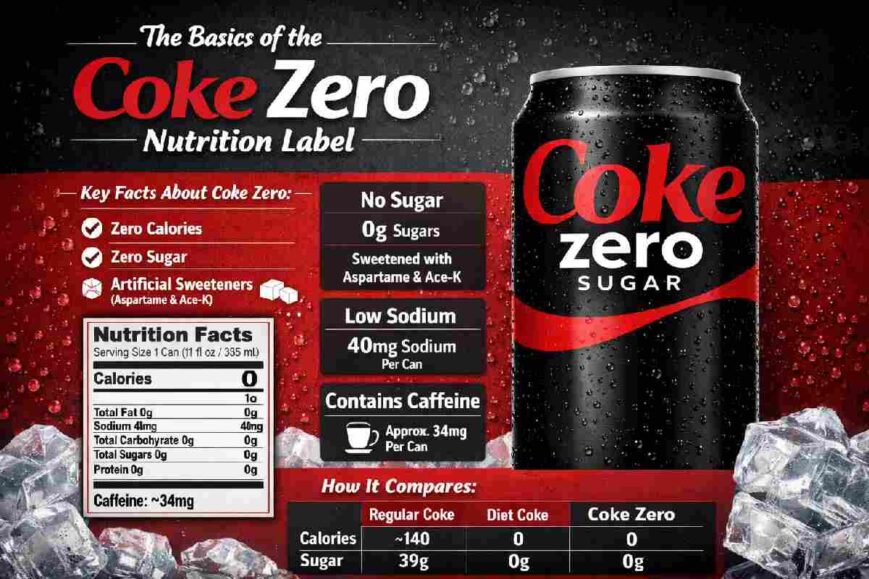
The Basics of the Coke Zero Nutrition Label – The first thing that may strike you when you grab a can of Coke Zero out of the refrigerator is the label on the back of the package and then you see the nutritional information. Though there are much more individuals who just like taking the drink because it is refreshing, the label actually tells much about what you are drinking. The Co. Zero nutrition label is able to make you smarter regarding the content of what you consume and how you should take it in reference to the health risks associated with it.
Coca-Cola Zero Sugar is a supposedly calorie and sugar-free drink branded as Coke Zero, which will offer the same taste as Coca-Cola does. It has become a favorite of those who want to consume a carbonated beverage but are in the act of lowering the amount of sugar that they consume.
Here we are going to discover the fundamentals of the Coke Zero nutrition label and break all these elements down as well as how all these numbers actually apply to your health. It does not matter whether you are on the calories count, sugar avoidance, or you are simply interested in knowing what is in the drink you are consuming, this article will enlighten you on all issues.
Coke Zero is not like the traditional Coca-Cola which has a considerable sugar content, the drinks are sweetened using other sweeteners in order to be calorie free.
Quick Overview of Coke Zero
| Feature | Description |
| Beverage Type | Carbonated Soft Drink |
| Sugar Content | 0 grams |
| Calories | 0 calories |
| Manufacturer | The Coca-Cola Company |
| Sweeteners Used | Aspartame, Acesulfame Potassium |
| Target Audience | People seeking a sugar-free soda |
This simple concept—the same taste without sugar—is what made Coke Zero extremely popular worldwide.
Understanding the Nutrition Label
The nutrition label on Coke Zero provides a snapshot of the drink’s nutritional profile. Even though it contains almost no calories, the label still lists several important details.
Standard Coke Zero Nutrition Label (Per 12 oz / 355 ml Can)
| Nutrient | Amount |
| Calories | 0 |
| Total Fat | 0 g |
| Sodium | 40 mg |
| Total Carbohydrates | 0 g |
| Sugars | 0 g |
| Protein | 0 g |
| Caffeine | ~34 mg |
At first glance, the label looks extremely simple compared to many other beverages. However, each component still plays a role in understanding the drink’s nutritional impact.
Let’s break each of these elements down in detail.
#Calories in Coke Zero
Calories are the measure of energy given by the food or beverages. Coke Zero has a number of selling points such as having zero calories.
Why Coke Zero Has No Calories
Conventional soda is made of sugar, which is a source of calories. Using the example of a regular cola, which is of course a soda, it contains approximately 140 calories per can because of sugar.
Coke Zero will be calorie-free since it will be sweetened using artificial sweeteners, which are no longer sources of energy.
Comparison: Regular Coke vs Coke Zero
| Beverage | Calories | Sugar |
| Regular Coca-Cola | ~140 | 39 g |
| Diet Coke | 0 | 0 g |
| Coke Zero | 0 | 0 g |
This makes Coke Zero attractive for people trying to:
- Lose weight
- Reduce sugar intake
- Control calorie consumption
However, calorie content alone doesn’t tell the whole story, which is why the rest of the nutrition label matters too.
#Sugar Content
Perhaps the most important part of the Coke Zero nutrition label is the sugar section.
Sugar in Regular Soda
Most standard soft drinks contain a high amount of sugar, often in the form of high fructose corn syrup or sucrose.
Example:
| Drink | Sugar Content |
| Regular Cola (12 oz) | 39 g |
| Orange Soda | 44 g |
| Lemon-Lime Soda | 38 g |
Consuming large amounts of sugar regularly can contribute to:
- Weight gain
- Tooth decay
- Blood sugar spikes
- Increased risk of metabolic diseases
Coke Zero’s Sugar Solution
Coke Zero contains 0 grams of sugar, which is why it is marketed as a sugar-free alternative.
Instead of sugar, the drink uses low-calorie sweeteners that mimic sweetness without affecting blood sugar levels significantly.
Artificial Sweeteners in Coke Zero
The sweetness in Coke Zero comes from a combination of aspartame and acesulfame potassium (Ace-K).
Key Sweeteners in Coke Zero
| Sweetener | Function | Sweetness Compared to Sugar |
| Aspartame | Primary sweetener | ~200× sweeter |
| Acesulfame Potassium | Enhances flavor | ~200× sweeter |
Because these sweeteners are extremely potent, only a very small amount is needed. This allows the drink to taste sweet while contributing almost no calories.
Why Two Sweeteners Are Used
Using two sweeteners together helps:
- Improve flavor balance
- Reduce aftertaste
- Replicate the taste of original Coca-Cola
This combination is what makes Coke Zero taste closer to regular Coke than earlier diet sodas.
#Sodium Content
Even though Coke Zero contains almost no calories or sugar, it does contain a small amount of sodium.
Sodium in Coke Zero
| Serving Size | Sodium |
| 12 oz Can | 40 mg |
For context:
| Item | Sodium |
| Coke Zero | 40 mg |
| Potato Chips (1 oz) | ~150 mg |
| Instant Noodles | ~800 mg |
Compared to many snack foods, the sodium level in Coke Zero is relatively low.
Why Sodium Is Added
Sodium in soft drinks helps with:
- Flavor enhancement
- Balancing acidity
- Improving shelf stability
The amount is small enough that it usually doesn’t contribute significantly to daily sodium intake.
#Carbohydrates in Coke Zero
Carbohydrates are typically one of the main sources of calories in drinks, especially sugary beverages.
However, Coke Zero contains 0 grams of carbohydrates.
Why There Are No Carbs
Regular soda gets carbohydrates from sugar. Since Coke Zero removes sugar entirely, the carbohydrate content drops to zero.
| Beverage | Carbohydrates |
| Regular Soda | 39 g |
| Fruit Juice | 25–30 g |
| Coke Zero | 0 g |
This makes Coke Zero a common choice for people following:
- Low-carb diets
- Keto diets
- Diabetic-friendly meal plans
#Caffeine Content
Caffeine is another component listed on the label or product information.
Amount of Caffeine
A standard can of Coke Zero contains about 34 mg of caffeine.
Caffeine Comparison
| Beverage | Caffeine |
| Coke Zero | 34 mg |
| Regular Coca-Cola | 34 mg |
| Coffee (8 oz) | 90–100 mg |
| Energy Drink | 80–150 mg |
So while Coke Zero contains caffeine, it’s much lower than coffee or energy drinks.
What Caffeine Does
Caffeine can:
- Increase alertness
- Reduce fatigue
- Improve focus temporarily
However, too much caffeine may lead to:
- Insomnia
- Nervousness
- Increased heart rate
Moderate consumption is generally considered safe for most adults.
Ingredients List Explained
Beyond the nutrition label, the ingredients list provides additional insight into what’s inside the drink.
Typical Coke Zero Ingredients
| Ingredient | Purpose |
| Carbonated Water | Base of the drink |
| Caramel Color | Gives cola its dark color |
| Phosphoric Acid | Provides tangy flavor |
| Aspartame | Sweetener |
| Potassium Benzoate | Preservative |
| Natural Flavors | Signature Coca-Cola taste |
| Caffeine | Mild stimulant |
| Acesulfame Potassium | Additional sweetener |
Each ingredient contributes to the overall flavor, appearance, and stability of the beverage.
How Coke Zero Compares to Other Diet Sodas
Not all sugar-free sodas are the same. Different brands use different sweeteners and formulations.
| Drink | Calories | Sugars | Carbohydrates | Sodium | Caffeine | Key Notes |
| Coca‑Cola Regular | ~140 kcal | ~39 g sugars | ~39 g carbs | ~30–45 mg | ~39 mg | Full‑sugar soda; high calories & sugar (adds energy, impacts blood glucose). |
| Coke Zero Sugar | 0 kcal | 0 g | 0 g | ~40 mg | ~34 mg | No sugar & calories; uses artificial sweeteners instead of sugar. |
| Diet Coke | 0 kcal | 0 g | 0 g | ~40 mg | ~46 mg | Also sugar‑free; slightly more caffeine and different sweetener profile than Coke Zero. |
| Pepsi Zero Sugar | 0 kcal | 0 g | 0 g | ~40 mg | (varies) | Pepsi’s zero‑sugar cola with similar nutrition to Coke Zero. (pepsi.com) |
| Pepsi Regular | ~150 kcal | ~41 g | ~41 g | ~30–45 mg | ~38 mg | Classic sweetened soda with similar calories and sugar to Coke. (p.globalsources.com) |
The combination of sweeteners in Coke Zero is often praised for producing a flavor closer to the original Coca-Cola.
Coke Zero vs Diet Coke
1. Sugar & Calories
- Both are sugar‑free and virtually calorie‑free — neither contains sugar or calories per standard serving.
2. Sweeteners Used
- Diet Coke: Uses aspartame as its main sweetener.
- Coke Zero: Uses a blend of aspartame + acesulfame potassium (Ace‑K) — this combo is meant to more closely mimic the taste of regular Coca‑Cola.
3. Caffeine Content
- Diet Coke typically has more caffeine (around ~46 mg per 12‑oz can).
- Coke Zero has slightly less caffeine (about ~34 mg per 12‑oz can).
4. Flavor Profile
- Coke Zero Sugar is formulated to taste closer to classic Coca‑Cola (the original soda taste).
- Diet Coke has its own distinct flavor — lighter and slightly sharper than classic Coke.
5. Ingredients & Formulation
- Both include carbonated water, caramel color, phosphoric acid, artificial sweeteners, and natural flavors.
- The difference in sweetener blend and flavoring acids (e.g., citric acid vs potassium citrate) contributes to their distinct tastes.
6. Marketing & Positioning
- Diet Coke has been on the market longer and historically was marketed with its own unique identity and flavor.
- Coke Zero Sugar (sometimes just called Coke Zero) is positioned as a zero‑sugar option that more closely mirrors the original Coca‑Cola taste.
Benefits of Choosing Coke Zero
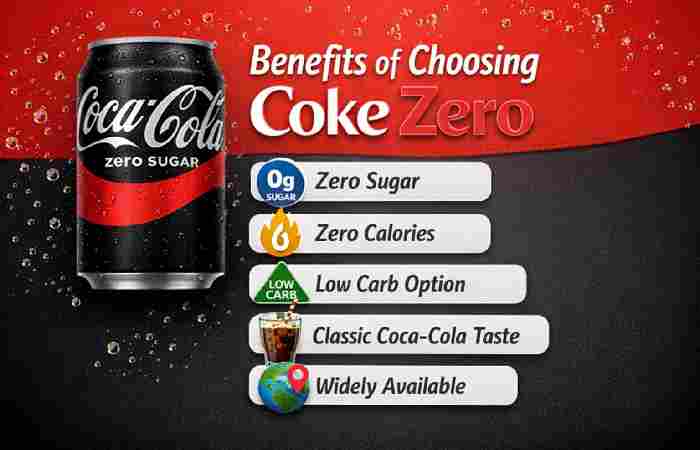
For many people, Coke Zero offers several advantages over sugary sodas.
Key Benefits
- No sugar
- No calories
- Low carbohydrate content
- Familiar Coca-Cola taste
- Widely available worldwide
Health Perspective
Switching from regular soda to Coke Zero can reduce daily sugar intake dramatically.
For example:
| Beverage Habit | Sugar Intake Per Day |
| 2 Regular Sodas | 78 g |
| 2 Coke Zeros | 0 g |
That difference alone can make a big impact on long-term health.
Potential Concerns to Consider
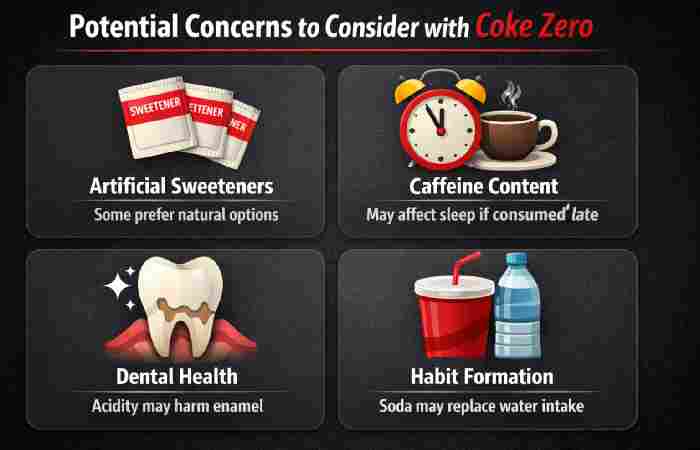
Although Coke Zero has advantages, some people prefer to limit diet soda consumption.
Common Concerns
| Concern | Explanation |
| Artificial Sweeteners | Some people prefer natural sweeteners |
| Caffeine | May affect sleep if consumed late |
| Dental Health | Acidity may affect tooth enamel |
| Habit Formation | Frequent soda drinking may replace water |
Most nutrition experts suggest enjoying diet sodas in moderation rather than relying on them as a primary beverage.
Tips for Reading Any Nutrition Label
Learning how to read a nutrition label is an important skill that applies to more than just Coke Zero.
What to Look For
- Serving size
- Calories per serving
- Sugar content
- Sodium levels
- Ingredients list
Simple Label Reading Guide
| Step | What It Means |
| Check serving size | Understand how much you’re consuming |
| Look at calories | Measure energy intake |
| Review sugar | Identify hidden sugars |
| Check sodium | Monitor salt intake |
| Read ingredients | Know what’s inside |
Once you get used to reading labels, you’ll find it easier to compare products and make healthier choices.
Final Thoughts
Coke Zero nutrition label can be easily understood but can be utilized to know much about what this drink is composed, and how this drink is utilized. Coke Zero is a fresh substitute to the usual dairy soda as it contains zero calories, zero sugar, and zero carbohydrates. It is sweetened with the help of a combination of very selected artificial sweeteners and a small portion of caffeine and sodium make it to taste good and enhance the experience.
Coke Zero can be a conveniently placed alternative to the individuals who are trying to cut their daily calorie or sugar consumption. However, just like any drink, there must be moderation in its intake as a type of healthy living. Being aware of nutrition labels will assist you in making a better choice not just about Coke Zero but also about any product of food and beverage you will be consuming either by drinking or eating. You will then have control over what you consume and overall health, when you become conversant with the number and ingredients.