
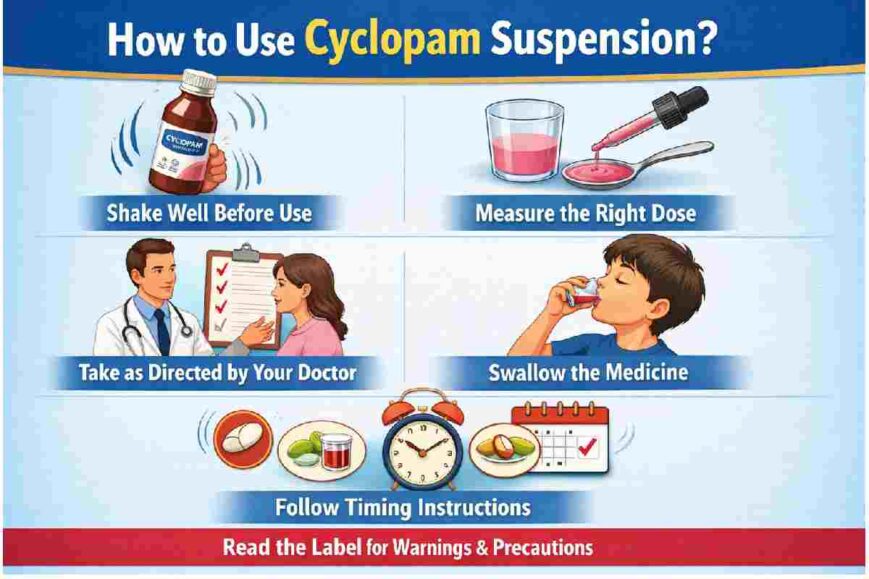
How to Use Cyclopam Suspension?: Abdominal pain or cramps (particularly in children) can be a great confuser to the parents who do not know what medicine is safe and what to do with it. Cyclopam Suspension is one of the frequently prescribed ones. However, it is equally important to use it properly as well as select the right medicine.
You will also find out how to administer Cyclopam suspension safely and effectively, the dosage tips, precautions, side effects, and tips that will come as natural rather than artificial in practice.
What Is Cyclopam Suspension?

Cyclopam Suspension is a prescription drug that is usually used to treat abdominal pains, stomach cramps, and intestinal spasms especially in children.
It normally has two active ingredients:
• Dicycloverine (Dicyclomine) -relaxes the intestinal muscles.
• Simethicone -lowering gas and bloating.
They are used together to alleviate pain that may be brought about by spasms and entrapment of gas in the digestive system.
Why Is Cyclopam Suspension Used?
Doctors typically recommend Cyclopam suspension for:
- Stomach cramps in children
- Gas-related abdominal discomfort
- Infant colic (in some cases)
- Irritable bowel symptoms
- Digestive spasms
It doesn’t cure the root cause but provides quick symptomatic relief, which can be incredibly helpful during painful episodes.
How Does Cyclopam Suspension Work?

Understanding how the medicine works makes it easier to trust the process.
| Ingredient | Function | Effect on Body |
| Dicycloverine | Antispasmodic | Relaxes intestinal muscles |
| Simethicone | Anti-foaming agent | Breaks down gas bubbles |
In simple words:
It loosens tight stomach muscles and removes trapped gas, giving relief from pain and discomfort.
How to Use Cyclopam Suspension (Step-by-Step)
Using Cyclopam correctly is essential, especially for children.
- Shake the Bottle Well
Before every use, shake the suspension thoroughly to ensure even distribution of the medicine.
- Measure the Dose Properly
Always use:
- A measuring spoon
- A dropper
- Or a medicine cup
Avoid using regular kitchen spoons—they can lead to incorrect dosing.
- Follow the Doctor’s Prescription
Dosage depends on:
- Age
- Weight
- Severity of symptoms
Never guess the dose.
- Give After Food (Usually Recommended)
Cyclopam is often given after meals to minimize stomach irritation and improve comfort.
- Maintain Timing
Give the medicine at regular intervals as prescribed for best results.
Recommended Dosage (General Guide)
Always consult a doctor before giving this medicine to children.
| Age Group | Typical Dosage Range | Frequency |
| Infants (if prescribed) | As advised by the paediatrician | Strict supervision |
| 1–5 years | 2.5 ml – 5 ml | 2–3 times a day |
| 6–12 years | 5 ml – 10 ml | 2–3 times a day |
These are approximate values—your doctor may adjust them.
When Should You Give Cyclopam?
Cyclopam works best when used at the right time.
Ideal Situations:
- Sudden stomach cramps
- Gas-related discomfort
- Post-meal bloating
- Crying due to abdominal pain (in kids)
Avoid Using When:
- Pain cause is unknown and severe
- Child has persistent vomiting
- There is high fever with abdominal pain
Important Precautions
Before using Cyclopam suspension, keep these points in mind:
Consult a Doctor If:
- Your child is below 6 months
- There’s a history of allergies
- The child has kidney or liver issues
Use Carefully If:
- The child is already taking other medicines
- There is dehydration or weakness
Do not:
- Overdose
- Use continuously without medical advice
- Share the medicine with others
Possible Side Effects
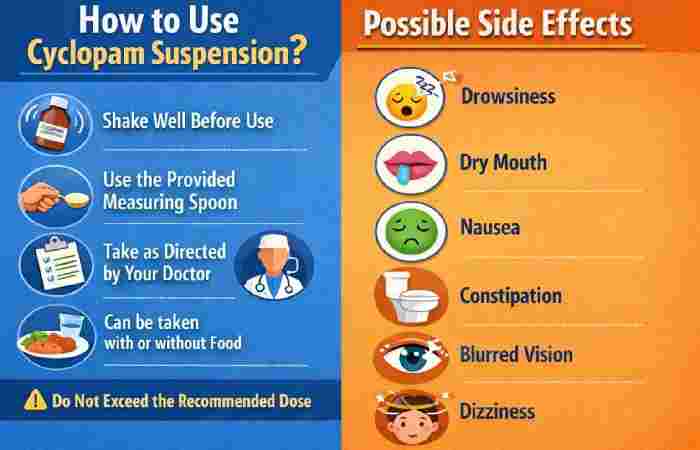
Like any medication, Cyclopam may cause some side effects—though not everyone experiences them.
| Common Side Effects | Rare but Serious Effects |
| Dry mouth | Difficulty breathing |
| Dizziness | Severe allergic reaction |
| Nausea | Irregular heartbeat |
| Sleepiness | Skin rash or swelling |
If you notice anything unusual, stop the medicine and contact a doctor immediately.
Tips for Parents (Real-Life Practical Advice)
Using medicines for kids can be tricky. Here are some real-world tips:
- Mix with a small amount of water if the child refuses (only if doctor allows)
- Keep a dose schedule to avoid missing doses
- Observe behavior after giving the medicine
- Don’t panic if relief isn’t instant—it may take some time
Storage Instructions
Proper storage keeps the medicine effective and safe.
- Store at room temperature
- Keep away from direct sunlight
- Close the bottle tightly
- Keep out of reach of children
What Happens If You Miss a Dose?
Missing a dose happens—don’t worry.
- Give it as soon as you remember
- Skip it if it’s almost time for the next dose
- Never double the dose
Overdose: What to Do?
An overdose can be dangerous.
Symptoms May Include:
- Extreme drowsiness
- Vomiting
- Breathing difficulty
In such cases, seek immediate medical help.
Cyclopam Suspension vs Drops

Sometimes people confuse suspension with drops. Here’s a quick comparison:
| Feature | Suspension | Drops |
| Form | Liquid (larger volume) | Concentrated liquid |
| Best For | Older infants & kids | Younger infants |
| Measurement | Spoon/cup | Dropper |
Frequently Asked Questions (FAQs)
- Can Cyclopam be given to infants?
Only if prescribed by a pediatrician. Never self-medicate.
- How quickly does it work?
Usually within 30–60 minutes, depending on the condition.
- Can it be used daily?
Only for a short duration unless advised by a doctor.
- Is it safe for long-term use?
No, it’s meant for temporary relief, not long-term treatment.
- Can adults use Cyclopam suspension?
Yes, but tablets are more commonly prescribed for adults.
When to See a Doctor Immediately
Don’t rely only on medication if symptoms worsen.
Seek medical help if:
- Pain persists for more than 24 hours
- There is fever or vomiting
- Blood appears in stool
- Child becomes unusually inactive
Final Thoughts
A fast and efficient remedy to stomach cramps and discomfort due to gas – particularly in children is cyclopam suspension. However, as any drug, its effectiveness depends on the right usage, the right dose and the advice of a doctor. Consider it as a temporary aid rather than the permanent one. Never overlook the state of pain but always attend to the cause of the pain and seek medical advice where doubt.