
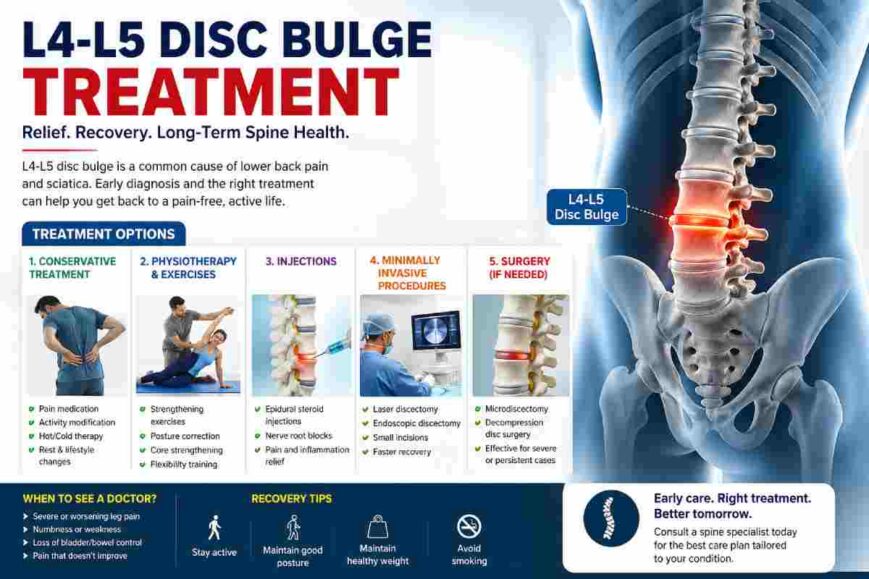
A bulging L4-L5 disc may make common tasks such as sitting, standing, bending or lifting a daily ordeal. Fortunately most lower back disc conditions resolve without surgery and treatment begins with basic non surgical care, and is generally followed with injections or surgery if required. In India, this care is usually delivered by orthopedic and spine surgeons, through physiotherapy and pain management, with some centers undertaking minimally invasive spinal surgery.
What Is an L4-L5 Disc Bulge?

The L4-L5 disc is situated at the bottom of the spine which is where the back is highly loaded and is also highly active. A disc bulge or herniation means that the softer central part of the disc bulges out into the harder outer layer, and the pressure this creates can pinch the nearby nerve(s). Doctors might use the phrases ‘slipped disc’, ‘prolapsed disc’ or ‘herniated disc’ to describe similar conditions in the lower back.
The pain may just occur locally within the lower back, or may spread into the buttock, the thigh, the leg and/or the foot. If this shooting leg pain occurs this is known as sciatica, and is caused by the bulging disc pressing on a nerve root.
Why L4-L5 Problems Feel So Disruptive

Lower back is designed for bending, twisting, lifting, and carrying-and that is why it is so prone to injury. In the lumbar area, L4-L5 and L5-S1 are the two levels that get prolapsed most often and many patients present with sensations like tingling, numbness, pain or weakness as the nerve is getting pinched.
Despite all this, most patients improve within weeks or months without surgery. This is why an L4-L5 bulge may appear much larger in its presentation than it sounds on the scan report; small disc problem can cause lot of pain if it impinges on the wrong nerve.
Common Symptoms You Should Notice Early
| Symptom | What it may feel like | Why it matters | Reference note |
| Lower-back pain | Dull ache, stiffness, pain on bending | Almost always the initial symptom | |
| Sciatica | Sharp, shooting pain down one leg | Hints at nerve impingement | |
| Numbness or tingling | Pins-and-needles in leg or foot | May point to a nerve being pressed | |
| Weakness | Difficulty raising the foot or bearing weight on the toes/heels | Needs medical evaluation sooner | |
| Bladder or bowel changes | Loss of control, trouble passing urine | Emergency warning sign |
How Doctors Diagnose an L4-L5 Disc Bulge

To diagnose your back pain, the doctor will ask questions about what you feel and what your back is like. They will assess how strong you are and what feel/ reflexes you have in your legs, and they will perform specific tests like the straight leg raise to check for involvement of nerve roots. If your pain is not improving, or the diagnosis is unclear, MRI scans can help pin down exactly which disc and nerve root are involved.
Fundamentally, the story of your pain is much more important than the scan; a good spine doctor will try to fit the scan to the symptoms, not the symptoms to the scan.
Comparison Table: Treatment Options for L4-L5 Disc Bulge
| Treatment option | Best for | What it usually includes | Pros | Limits | Reference note |
| Rest + activity modification | Mild to moderate pain | Short rest, then gradual movement, avoiding heavy bending and lifting | Often helps early recovery | Too much bed rest can slow recovery | |
| Pain medicines | Pain and inflammation | NSAIDs such as ibuprofen or naproxen; sometimes stronger short-term pain relief or muscle relaxants | Can make walking and therapy easier | Not ideal for long-term unsupervised use | |
| Physiotherapy | Ongoing pain, weak core, poor posture | Strengthening of back and abs, posture, coached sets of exercises | Helps build long-term support | Needs consistency, not one-time sessions | |
| Epidural steroid injection | Nerve pain that does not settle with basic care | Injection of medication around the nerve that is inflamed. | May give short-term relief and help rehab | Does not “fix” the disc itself | |
| Surgery | Profound pain, weakness or treatment failure with conservative management. | Injecting medicine around the swollen nerve. | Can relieve leg pain quickly in the right patient | Has surgical risks and recovery time |
What Treatment Usually Looks Like in Real Life
The initial phase for most people is conservative management: medication to alleviate pain, careful mobilisation, and physiotherapy. There are documented views from AAOS and NHS stating that many cases of herniated/slipped discs recover without surgery; in addition the NHS document refers to painkillers, a short course of steroids, and physiotherapy.
When there is recurring pain or the presence of leg weakness or numbness then surgery will be considered with the help of a spine specialist. AAOS states that surgery is considered when persistent leg pain is debilitating despite non-surgical management for many months; the NHS document adds that surgery is not usually indicated unless conservative treatments have been exhausted or the weakness is worsening.
In India major centers such as AIIMS include spine surgery services for herniated discs and spinal problems and feature details of minimally invasive procedures and technological advancements. Patients in India generally therefore have access to all the levels of the treatment path ranging from medication, physiotherapy through to imaging assisted procedures and then, where required, surgery.
Surgery Options: When Doctors Mention Them
Microdiscectomy is the most commonly used surgical procedure when only one slipped disc needs to be dealt with and a tiny incision is made so the herniated section can be removed by the surgeon from the nerve. The procedure of spinal decompression involves surgery to relieve the compressed nerves and can vary according to what exactly needs to be done. Surgery can be successful in treating the symptoms in the leg when nerve compression is the cause.
Surgery does not need to be considered for the majority of patients. Many patients’ inflammation can resolve itself within a certain period and can be treated with conservative management alone.
Recovery and Daily Habits That Help
| Habit | What helps | Why it matters | Reference note |
| Walking | Short, gentle walks | Keeps the back from becoming too stiff | |
| Sitting | Take breaks; avoid long sitting | Long sitting can aggravate symptoms | |
| Lifting | Bend knees, not the waist | Reduces strain on the lower spine | |
| Exercise | Guided core and back strengthening | Supports the spine and lowers repeat injury risk | |
| Weight and smoking | Healthy weight and no smoking | Both affect disc stress and recovery |
When You Should Seek Urgent Help
You must seek medical attention immediately if you have back pain that is also associated with numbness around your buttocks and/or genitals, difficulty with micturition (passing water), loss of sensation around the bladder and/or bowels or if you have lost sensation in one or both of your legs. These ‘red flags’ suggest that you may have cauda equina syndrome and requires urgent treatment.
Final Thought
An L4 L5 disc bulge typically has a good prognosis in the Indian subcontinent, and management of the L4 L5 disc bulge will depend on the severity of your pain, presence of radiating leg pain, or weakness. A course of medication, movement, and physiotherapy will typically be prescribed first and surgery and injections are considered only for persistent, severe symptoms. Panic should be avoided, however, warning signs should be monitored carefully.