
 Khizrana Begum
Health & Wellness Writer
Khizrana Begum is a health and wellness writer
focused on clear, practical, and reader-friendly
health, nutrition, fitness, and lifestyle content.
Read Full Bio of Author →
Khizrana Begum
Health & Wellness Writer
Khizrana Begum is a health and wellness writer
focused on clear, practical, and reader-friendly
health, nutrition, fitness, and lifestyle content.
Read Full Bio of Author →
 Sameena Begum
Health, Wellness & Digital Content Reviewer
Sameena Begum reviews health, wellness, fitness, nutrition, and digital content for clarity, factual presentation, consistency, and reader usefulness.
Read Full Bio of Reviewer →
Sameena Begum
Health, Wellness & Digital Content Reviewer
Sameena Begum reviews health, wellness, fitness, nutrition, and digital content for clarity, factual presentation, consistency, and reader usefulness.
Read Full Bio of Reviewer →
 Dr. Syed Imtiaz
General Physician & Dermatologist
Dr. Syed Imtiaz is an MBBS and MD qualified
medical professional with 5+ years of experience
in general medicine and dermatology.
Read Full Bio of Medical Reviewer →
Dr. Syed Imtiaz
General Physician & Dermatologist
Dr. Syed Imtiaz is an MBBS and MD qualified
medical professional with 5+ years of experience
in general medicine and dermatology.
Read Full Bio of Medical Reviewer →
Temperature Stability Storage
Anyone who has ever left a bottle of supplements in a hot car or watched a refrigerator door stay open too long has an intuitive sense of how quickly heat can change a product. For biological samples, nutritional compounds, and clinical materials, that intuition understates the real risk. Consistent temperature stability storage is not a convenience feature; it is often the single factor that determines whether a sample, vaccine, or nutrient-rich material still behaves the way it was intended to when it is finally used. Small, repeated fluctuations can quietly erode potency long before anything looks visibly wrong. This article explains why temperature control is so central to preserving sensitive health-related materials and how professional environments are built to manage that challenge without relying on guesswork.
TL;DR — Key Takeaways
- Sensitive biological and nutritional materials degrade faster with fluctuating temperatures, even when the average reading looks acceptable.
- Household-grade cooling tolerates swings that clinical and laboratory storage cannot absorb without risking sample integrity.
- Reliable temperature stability storage depends on precise electronics, strong insulation, and active alarm monitoring rather than passive cooling alone.
- Documentation and traceable temperature logs are as important as the cooling itself in regulated settings.
Why Temperature Stability Matters for Health-Related Storage
Biological and nutritional materials are chemically active even at rest. Proteins fold into specific shapes that determine how they function, vitamins oxidize at different rates depending on heat exposure, and many biological compounds rely on a narrow temperature band to remain stable. When temperature drifts even a few degrees above or below the intended range, these molecules can begin to change structure or break down. The damage is frequently invisible to the eye, which is what makes it so risky: a sample can look completely normal while its actual potency or diagnostic reliability has already dropped.
Household refrigeration was never designed with this level of precision in mind. A domestic fridge cycles its compressor on and off in a way that creates a noticeable range between its coldest and warmest moments, and opening the door repeatedly introduces further temporary spikes. For everyday food storage, this tolerance is generally acceptable. For a nutritional supplement with sensitive active ingredients, a reagent used in testing, or a biological sample awaiting analysis, that same swing can be the difference between a usable result and a compromised one.
Clinical and research settings work with a much narrower margin. The materials involved are often irreplaceable, expensive to reproduce, or directly tied to a patient’s diagnosis or treatment. Because temperature fluctuations can compromise the integrity of sensitive biological and nutritional samples, the goal in these environments is not just “cold enough,” but consistently and predictably cold, cycle after cycle, day after day.
The Hidden Risks of Inconsistent Cooling
Unreliable cooling rarely causes dramatic, obvious failures. More often, it causes a slow, cumulative erosion of quality that only becomes visible once it is too late to correct. A supplement or nutraceutical stored through repeated temperature swings may lose potency gradually, meaning the product on the shelf no longer matches the concentration listed on its label. A diagnostic sample exposed to intermittent warming may still produce a result, but that result becomes less trustworthy, which is arguably more dangerous than an obvious spoilage event because it can go unnoticed.
Spoilage risk works the same way. Microbial growth accelerates once a material spends even brief periods above its intended threshold, and repeated brief exposures can have a cumulative effect similar to one longer excursion. This is one reason cooling systems built for sensitive storage rely on more than a simple thermostat. Continuous monitoring, paired with an alarm that triggers the moment conditions drift outside an acceptable window, allows staff to intervene before a temporary fluctuation becomes a lasting problem. Without that kind of active oversight, a cooling failure can go undetected for hours, by which point the damage to the stored material is already done.
The sequence matters here: first, stable cooling limits how often conditions drift at all; second, monitoring catches the moments when drift happens anyway; third, an alarm converts that data point into a timely human response. Remove any one of those three layers, and the overall system becomes considerably less dependable, even if the refrigeration unit itself is otherwise well built.
How Professional Facilities Ensure Reliable Sample Preservation
Laboratories, pharmacies, and clinical storage areas solve this problem by treating temperature control as an engineering requirement rather than a background feature. Precise electronic controls regulate compressor cycles far more tightly than a standard household appliance, keeping the internal environment within a narrow band instead of allowing it to swing broadly between cooling cycles. Reinforced insulation reduces how much outside heat penetrates the cabinet in the first place, which lowers the workload on the cooling system and makes the internal temperature easier to hold steady even when a door is opened for sample retrieval.
Built-in alarm functions add another layer of protection. Rather than waiting for a staff member to notice a problem during a routine check, these systems flag deviations as they happen, which shortens the window between a fault occurring and someone responding to it. Over time, this also reduces wear-related failures, since a unit that is not straining to compensate for poor insulation or inconsistent electronics tends to have a longer working life and needs less frequent servicing.
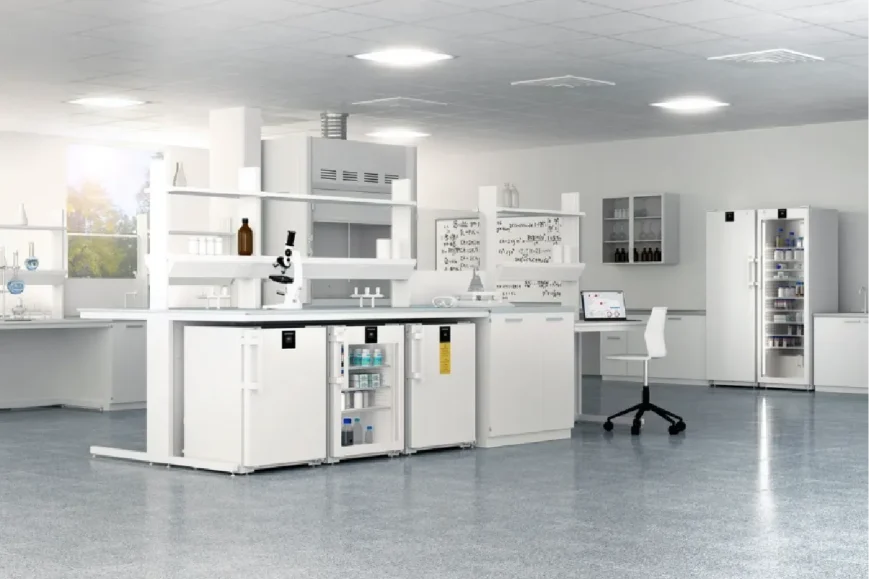
Equipment purpose-built for this exact requirement, such as a laboratory-grade lab fridge, is designed around the assumption that stability, not just low temperature, is the priority. That distinction shapes everything from how the compressor cycles to how quickly the cabinet recovers after being opened. For facilities handling supplements, reagents, or clinical samples, this kind of dependable performance under everyday working conditions is what separates routine storage from storage that can be trusted for sensitive materials, even during a demanding daily workflow with frequent access.
Documentation and Trust in Regulated Storage Environments
Reliable cooling only solves half of the problem in a regulated setting. The other half is proof: being able to show, after the fact, that a stored material actually remained within its required range for the entire storage period. Regulatory frameworks often require documented, traceable storage conditions in laboratory settings, which means a facility needs more than confidence that its cooling worked; it needs a record that demonstrates it.
This is where digital monitoring earns its place alongside the cooling hardware itself. Continuous temperature logging creates a traceable history rather than a series of spot checks, so that if a question arises about a specific sample or batch, staff can review exactly what conditions it experienced rather than relying on memory or assumption. During an audit, this kind of documentation shifts the conversation from “we believe it was stored correctly” to “here is the record showing it was stored correctly,” which is a meaningfully stronger position for a facility to be in.
Digital systems built for this purpose typically combine the alarm functions already used for day-to-day safety with longer-term data storage, so the same infrastructure that protects a sample in the moment also builds the paper trail needed later. This dual role reduces administrative burden because staff are not maintaining two separate systems, one for active monitoring and another for compliance records. Instead, the documentation is a byproduct of the same monitoring that keeps materials safe in the first place, which makes consistent record-keeping far more realistic in a busy daily workflow than a manual logging process would allow.
Frequently Asked Questions (FAQ)
How is a laboratory refrigeration unit different from a household refrigerator?
The core difference lies in tolerance for fluctuation. A household unit cycles within a wider temperature range and is optimized for general food storage, while laboratory-grade equipment is engineered to hold a narrow, consistent band even with frequent door openings, using tighter electronic control and stronger insulation to limit temperature drift.
What happens if a sensitive sample briefly experiences the wrong temperature?
Even short excursions outside the intended range can begin to affect sensitive proteins, vitamins, or biological compounds, since degradation is often driven by cumulative exposure rather than a single dramatic event. The extent of the impact depends on the specific material, how far the temperature drifted, and how long the exposure lasted, which is why continuous monitoring and prompt alarm response matter more than an occasional manual check.
Why is documentation considered part of safe storage rather than a separate task?
Because proof of stable conditions is often as important as the stability itself in regulated environments. A traceable temperature record allows a facility to demonstrate, after the fact, that a sample was stored correctly, supporting both internal quality assurance and any external review of how sensitive materials were handled over time.
Khizrana Begum creates clear and reader-friendly content covering health, wellness, nutrition, fitness, and healthy lifestyle topics.
View Author Profile →
Sameena Begum reviews health, wellness, fitness, nutrition, and digital content for clarity, factual presentation, consistency, and reader usefulness.
View Reviewer Profile →
Dr. Syed Imtiaz is an MBBS and MD qualified medical professional with 5+ years of experience in general medicine and dermatology.
View Medical Reviewer Profile →