

 Khizrana Begum
Health & Wellness Writer
Khizrana Begum is a health and wellness writer
focused on clear, practical, and reader-friendly
health, nutrition, fitness, and lifestyle content.
Read Full Bio of Author →
Khizrana Begum
Health & Wellness Writer
Khizrana Begum is a health and wellness writer
focused on clear, practical, and reader-friendly
health, nutrition, fitness, and lifestyle content.
Read Full Bio of Author →
 Sameena Begum
Health, Wellness & Digital Content Reviewer
Sameena Begum reviews health, wellness, fitness, nutrition, and digital content for clarity, factual presentation, consistency, and reader usefulness.
Read Full Bio of Reviewer →
Sameena Begum
Health, Wellness & Digital Content Reviewer
Sameena Begum reviews health, wellness, fitness, nutrition, and digital content for clarity, factual presentation, consistency, and reader usefulness.
Read Full Bio of Reviewer →
 Dr. Syed Imtiaz
General Physician & Dermatologist
Dr. Syed Imtiaz is an MBBS and MD qualified
medical professional with 5+ years of experience
in general medicine and dermatology.
Read Full Bio of Medical Reviewer →
Dr. Syed Imtiaz
General Physician & Dermatologist
Dr. Syed Imtiaz is an MBBS and MD qualified
medical professional with 5+ years of experience
in general medicine and dermatology.
Read Full Bio of Medical Reviewer →
If a cough is associated with mucus, congestion and airway tightening a doctor might prescribe a double action medication such as Terbutaline sulphate (which is a bronchodilator-which helps open the airway) and Bromhexine hydrochloride (which is a mucolytic-a mucolytic helps to breakdown mucus in the airways, thus making it easier to cough up the mucus and clear the airway of congestion). In India this dual action medication is sold under several brand names and some of the related syrups contain Guaiphenesin and Menthol as well.
What is Terbutaline Sulphate and Bromhexine Hydrochloride Syrup?

This is a medicine used for cough with narrowing of the airways and viscous sputum. Terbutaline acts as a bronchodilator and thus relaxes the airways. This should allow better air flow. Bromhexine acts as a mucolytic agent and thus reduces the stickiness of the phlegm. It may aid in easing cough from the body. In short, one relaxes the airway, the other thins the blockage.
This should explain why this mixture of medicine has become a focus of discussion for cough due to bronchitis, bronchial asthma, emphysema, and bronchopulmonary problems involving combined broncospasm and mucus production. The target is not only to prevent cough but also to allow better breathing and clearing of the chest.
How each Ingredient Works?
Terbutaline works to relax the muscles that surround the airways. If these muscles tighten then the chest can feel tight and breathing wheezy. By opening up these muscles you are likely to lessen that tight feeling and make it easier to breath. The official drug information also tells us that there can be cardiovascular effects from taking this medicine, and as such it is not a light or trivial medication.
For digestive health support, you can also learn more about
Lactic Acid Bacillus Tablets uses
and how probiotics may help maintain healthy gut bacteria.
Bromhexine is an example of a mucolytic agent, this means it works to break down the mucus and alleviate chest congestion. This is especially important when the cough is “wet”, chesty or sticky, as this phlegm can build up and cause breathing more difficult than it need be.
Comparison Table: How the Two Ingredients Differ
| Feature | Terbutaline sulphate | Bromhexine hydrochloride | Combined syrup |
| Main role | Bronchodilator | Mucolytic | Supports both airway opening and mucus clearance |
| What it helps with | Wheezing, bronchospasm, tight chest | Thick phlegm, chest congestion | Cough with mucus plus airway tightening |
| Core action | Relaxes airway muscles | Breaks down and loosens mucus | Makes breathing easier and sputum easier to expel |
| Best fit | When the airways feel narrowed | When mucus is thick and sticky | When both problems happen together |
| Key caution | Can affect heart rate and blood pressure in some people | Usually focused on mucus clearance | Needs medical advice if symptoms are severe or persistent |
Terbutaline is stated in official drug summaries as being for wheeze, and shortness of breath, acting to relax the bronchi. Bromhexine is said to act as a mucolytic, acting to clear congestion in the chest. Therefore this formulation is intended for mixed respiratory presentations, and not for a simple sore throat.
Key Highlights of Terbutaline Sulphate + Bromhexine Hydrochloride Syrup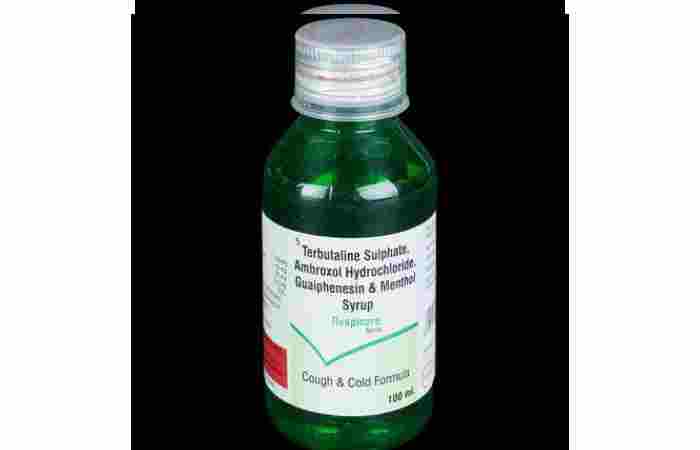
For information about medicines used to manage urinary acidity and related conditions, see our guide on
Disodium Hydrogen Citrate Syrup.
sulphate + bromhexine hydrochloride syrup” width=”700″ height=”450″ />
- Helps relax airway muscles, making breathing easier
- Works as a mucus thinner, helping clear chest congestion
- Useful for wet (productive) cough with phlegm
- Commonly prescribed for bronchitis, asthma-related cough, and chest congestion
- Combines two actions in one syrup (bronchodilator + mucolytic)
- Helps make coughing more productive rather than painful
Why is this formulation used in Indian practice
This formulation can be readily found on Indian pharmacy lists, under various brand names. Some formulations only use terbutaline and bromhexine, while within the same family of cough syrups are formulations also including guaiphenesin, and menthol. This is why reading the label is essential, because the brand name looks familiar but the formula is potentially different.
The practical implication of this medicine to the patient is that one drug can relieve a component that is causing airflow difficulty, and the other drug can mobilize the secretion causing this blockage. This might be particularly useful in those patients whose cough is not just irritating but feels exhausting due to difficulty in bringing up chest congestion.
Benefits of This Combination Syrup
- Reduces chest tightness and wheezing
- Helps remove thick, sticky mucus
- Improves overall breathing comfort
- Saves time by avoiding multiple medicines
- Suitable for respiratory infections with mucus buildup
Possible side effects and cautions
This syrup, like all medicines, can have side-effects. Side-effects cited in the terbutaline-bromhexine product information include nausea, dyspepsia, flatulence, diarrhea, giddiness, headache, trembling, sweating, fast pulse rate, vomiting, rashes and itching as well as other effects. Palpitations, chest pain, fast pulse rate and nervousness are also reported in relation to terbutaline. Terbutaline requires special care if used by patients with cardiovascular disease, hyperthyroidism, diabetes mellitus, and convulsive disorders. Official labeling also warns that if symptoms of asthma deteriorate, or if the patient requires the medicine more frequently than prescribed, the patient must see a doctor since this may represent the disease rather than the cough.
If you are researching cough medicines, it is also useful to understand medicines such as
Hydrocodone Acetaminophen 5-325,
which is used for specific types of pain and cough-related conditions under medical supervision.
When It Is Usually Recommended
- Wet cough with heavy mucus
- Cough with breathing difficulty or wheezing
- Conditions like bronchitis or airway inflammation
- Chest congestion that feels blocked or tight
Common Side Effects
- Mild headache or dizziness
- Slight increase in heart rate
- Nausea or stomach discomfort
- Tremors or shakiness (due to terbutaline)
- Occasional skin rash or itching
Who should be extra careful?
Use with caution in anyone with heart disease, heart rhythm abnormality, hypertension, thyroid disease, or diabetes. Pregnant and lactating women are not prescribed Terbutaline unless by order of a doctor, and as there is a black box warning against use in pregnancy in case of premature labor, this is certainly not what to take at home as a “shot in the arm.”Children should only be given these types of syrups when ordered by the physician as dosage and timing varies, depending on brand and age of child and so this is not a substance to guess with; the underlying complaint will almost certainly be respiratory.
When this syrup may not be the right choice
Not all coughs can or need to be treated with this medicine. It is not for a mere tickle in the throat, an irritation or the everyday seasonal cough that does not produce mucus and in no way cause any constriction in the airways. The theory is very clear – the syrup is meant for mucus and bronchospasm; it is not a universal cough medicine and hence doctor’s assessment is crucial.
For information about alprazolam and its uses, precautions, and possible side effects, read our guide to
Alprax 0.5 mg Tablet uses.
It is imperative to seek medical attention if the cough is severe, protracted, is accompanied by fever, chest pains, bleeding in the sputum or increasing breathlessness, if it is not merely simple bronchitis, and then use this medication instead of altering cough syrups.
Quick comparison: when it helps most
| Situation | Is the syrup a good fit? | Why |
| Wet cough with thick mucus | Often yes | Bromhexine helps loosen mucus and terbutaline supports breathing. |
| Cough with wheezing or chest tightness | Often yes | Terbutaline helps open narrowed airways. |
| Simple dry cough | Usually not the first choice | The formula is designed for mucus and bronchospasm. |
| Cough with fever or severe breathlessness | Needs medical review | May point to a condition that needs more than cough medicine. |
Frequently asked questions
Is terbutaline sulphate and bromhexine hydrochloride syrup a cough suppressant?
Another cough and cold medicine you may come across is
Promethazine DM 6.25/15 mg per 5 ml.
Understanding its ingredients and precautions can help you use cough medicines more safely.
Not exactly. It is better described as a cough-relief medicine that opens the airways and helps clear mucus. That is different from a pure suppressant that simply reduces the urge to cough.
Can this syrup be used for an asthma-related cough?
It is used in cough associated with bronchial asthma and other bronchopulmonary conditions, but asthma treatment is broader than one syrup. Official terbutaline information also warns that worsening symptoms need reevaluation rather than repeated self-use.
Why do some Indian syrups with this category look different?
Because the combination family is not always the same. Some Indian products include extra ingredients such as guaiphenesin and menthol, so two bottles with similar names may not have the same formula. Reading the label is essential.
For another medicine commonly discussed for urinary discomfort and urine alkalinization, see
Alkacitral Syrup uses.
Final thoughts
Terbutaline sulphate and bromhexine hydrochloride syrup can best be viewed as a two-part medication to support the respiratory system – the terbutaline opens the airways, the bromhexine removes phlegm. So it is most suited to chesty coughs and wheezy coughs and conditions of the bronchi where there is a feeling of difficulty breathing with persistent phlegm.
Khizrana Begum creates clear and reader-friendly content covering health, wellness, nutrition, fitness, and healthy lifestyle topics.
View Author Profile →
Sameena Begum reviews health, wellness, fitness, nutrition, and digital content for clarity, factual presentation, consistency, and reader usefulness.
View Reviewer Profile →
Dr. Syed Imtiaz is an MBBS and MD qualified medical professional with 5+ years of experience in general medicine and dermatology.
View Medical Reviewer Profile →